Traffic Management

Durable Precast Concrete Components for Safer On-Road Conditions

SVC’s approach to traffic management centres on delivering robust, high-quality products and practical solutions that enhance road safety, control vehicle flow, and protect pedestrians in community settings. Catering to a broad spectrum of commercial, civil, and local government projects, our dependable on-road product solutions align with Australian safety regulations and urban planning needs.

Our comprehensive traffic management range includes precast kerbs, spiked kerbs, wheel stops, and speed humps, all of which are carefully engineered for durability and consistent performance under varying conditions. These components function seamlessly in car parks, industrial estates, residential developments, and streetscapes  where they help to reduce speed, guide traffic and prevent accidents.

By combining industry-compliant designs with high-strength materials and local manufacturing expertise, SVC’s traffic management products not only meet compliance standards but also contribute to safer, more orderly environments for all road users.
CATEGORIES

Carpark Construction

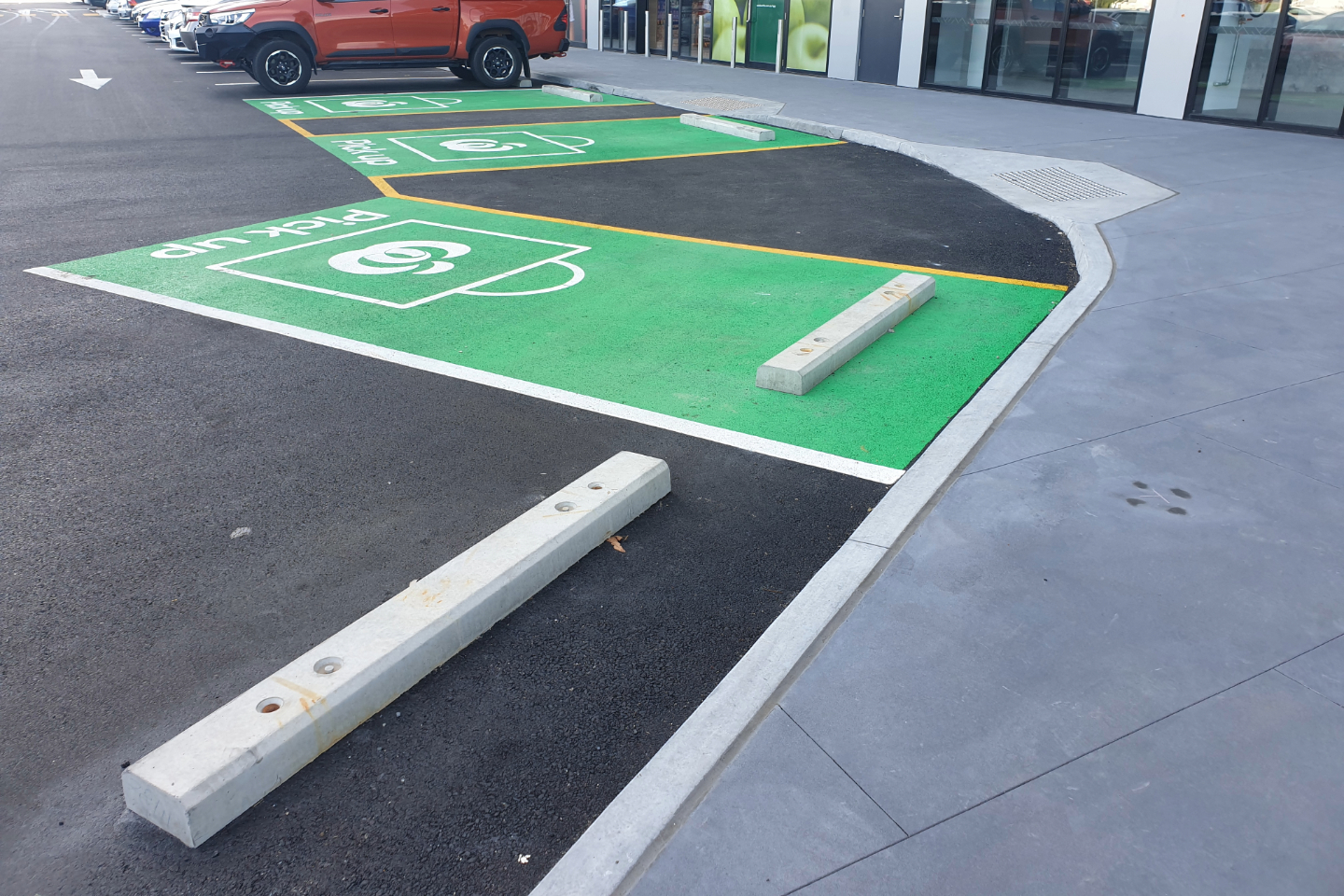
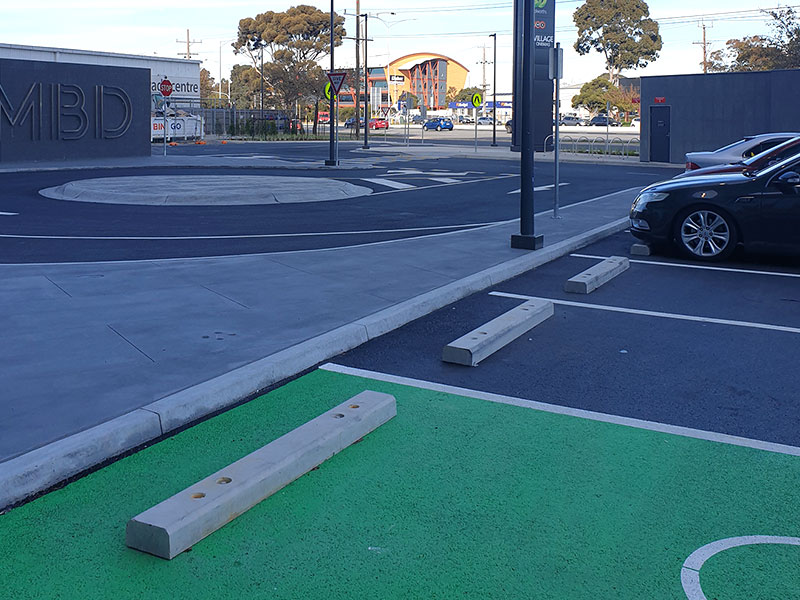
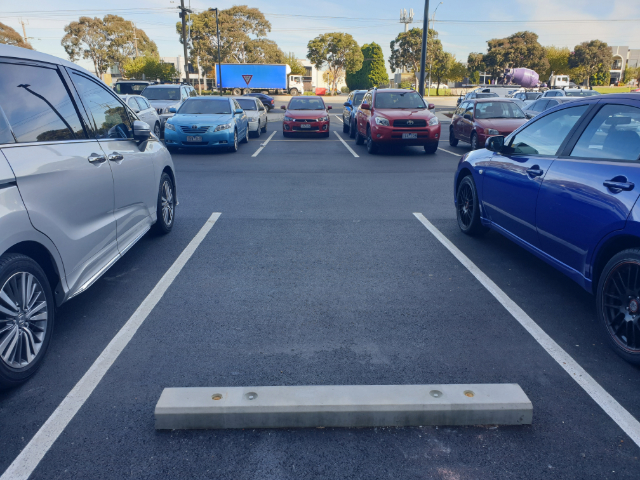
In carpark construction, effective traffic management is crucial for smooth vehicle flow and user safety. SVC’s precast concrete wheel stops and spiked kerbs help to define parking spaces, control vehicle speeds and prevent vehicle overrun, creating safer and more organised parking environments.

Nature Strips and Traffic Medians

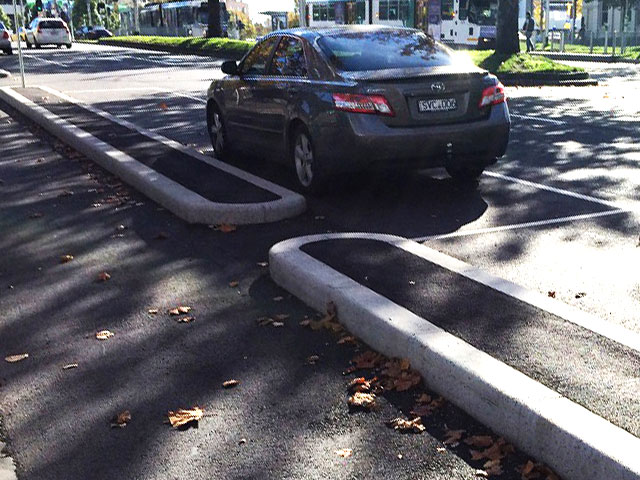
Nature strips and traffic medians play a key role in keeping pedestrian pathways safely separated from vehicle zones. SVC offers spiked kerbs and 300×200 precast concrete kerbing (suiting the City of Melbourne specification) that provide a durable and visually clear boundary, deterring vehicle encroachment while maintaining the neat aesthetics of the streetscape.

On-Road Speed Deterrents

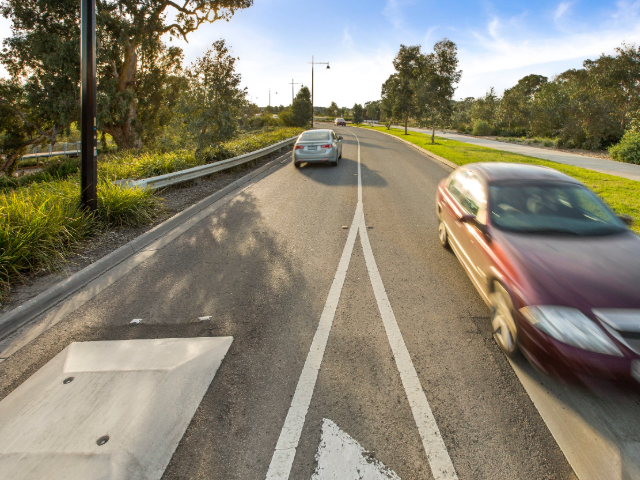
In busy traffic environments, on-road speed cushions are a vital tool for slowing down fast-moving traffic and improving safety conditions for all road users. Made from high-strength precast concrete, SVC speed humps provide a longer-lasting solution than rubber or plastic alternatives, creating a cost-effective option to control traffic speed and flow in critical thoroughfares.

CLIENTS WE’VE WORKED WITH

Products For Traffic Management

17.498 Bike Lane Kerb End

Bike Lane Separation Kerbs

SVC's innovative Bike Lane Kerb Separators provide safe physical dividers between bicycle and car traffic, with different kerb profiles on either side to cater to the relevant road user needs. They provide a long-lasting permanent solution for on-road bike lanes.
PROD_Precast-Kerbs

Precast Kerbs

SVC's exposed aggregate concrete kerbs are used extensively in the City of Melbourne and surrounds, creating road edging and median strips that offer years of enduring performance and visual appeal in the outdoor environment.
PROD_Spiked-Kerbs

Spiked Kerbs

Available in a barrier-type or semi-mountable profile, spiked kerbs provide a convenient traffic separation solution that can be quickly installed onto the road surface using kerb spikes.
PROD_Wheel-Stops

Wheel Stops

Concrete wheel stops are installed in car parks to prevent vehicles from mounting pedestrian walkways or hitting walls when parking.
PROD_Road-Humps

On-Road Speed Humps

With excellent strength and durability, precast concrete speed humps provide a reliable, long-lasting solution for slowing down vehicle traffic.

Contact Us Today

Operating since 1948, SVC Products is a well-respected local manufacturer and supplier of high quality products to the civil construction industry.

Contact our friendly team to discuss your next project.

Frequently asked questions

Can you incorporate colour or reflective markings into precast kerbs?

SVC's precast kerbing range - including traffic median kerbs, spiked kerbs, wheel stops, bike separator kerbs and speed humps - is produced in our standard high-strength concrete mix, supplied in an industrial grey concrete colour. This provides a clean blank canvas that allows the client to paint, stencil or add reflective markings to the kerbing products for applications where high-visibility is required.

How are SVC’s Bike Lane Separators installed?

SVC's precast bike lane separator units are designed to be installed 125mm beneath the road surface, which sets them deeper into the road, adding extra stability and preventing displacement. The units should be lifted into place using lifting clutches that can be connected to the steel lifting anchors that are cast into the top surface of each unit.

Each bike kerb unit can be connected to the adjoining unit using 13mm dia dowel connectors, inserted into the unit's dowel voids. A high-strength epoxy adhesive can be used on the base of each unit to create a secure bond with the surface beneath, though this is not a mandatory step.

Why use concrete kerbs instead of plastic or rubber alternatives?

Opting for high-strength precast concrete kerbs creates a solid barrier that offers genuine physical protection, thanks to the material's excellent performance in the outdoor environment and its resistance to degradation, wear and tear. They are a resilient, long-lasting asset in comparison with other materials such as plastic or rubber kerbing options, which are easily damaged upon vehicular impact and require frequent replacement.

How do you join the sections of precast kerb?

The kerb sections are laid end-to-end on a prepared flat base made from concrete, crushed rock or a mortar bed. The edges of the units are butted up together and can be joined with or without adhesive. As they are designed to be installed slightly lower than the road surface, the surrounding asphalt reduces the likelihood of the kerbs moving around.

Are different kerb shapes and profiles available?

SVC's most popular option for precast metropolitan kerbs is our distinctive 300x200 barrier kerb profile, which is listed on the City of Melbourne design specification. This kerb profile is available in a variety of different sizes i.e. 1m straights and multiple radial options.

Other kerb profiles are also available, such as 200x200, 300x300 and 500x200 profiles - these options are much less popular and have fewer varieties compared to the 300x200 range.

What is the advantage of precast kerbing over pouring on-site?

Compared to forming up concrete kerb on-site, installing precast kerbs offers superior quality control and reduced installation time. In-situ kerb installation requires time and labour to prepare formwork, pour and shape concrete on-site, plus a minimum of 24-48 hours for the kerbing to set and dry after installation. In comparison, precast kerbs are delivered to site ready for immediate installation and do not require any further curing time after installation.

Thanks to the controls of a factory manufacturing environment, precast kerbs are often stronger in compressive strength than in-situ concrete. They also exhibit a visually appealing exposed aggregate finish made possible by the shot-blasting of the kerb units during manufacture. All work is completed at the factory prior to installation, meaning the kerbing units arrive on site ready to install as finished products.

How are spiked wheel stops installed?

The wheel stop is placed in the correct position, and holes are drilled through pre-formed voids into the pavement below. Galvanized steel spikes are then driven through the unit into the ground.

How many wheel stops do I need for a single car space?

Typically, standard practice requires one wheel stop centred in each individual parking bay.

Why choose concrete wheel stops over rubber ones?

Concrete wheel stops are significantly more durable, vandal-resistant, and do not degrade or become brittle from UV exposure. They provide a more robust, long-term solution for any high-traffic car park.

How are concrete speed hump modules installed?

The modules are supplied as individual units that are placed in sequence and securely fixed on a concrete or mortar base, slightly beneath the finished road surface. Asphalt is then used to fill in any gaps around the speed hump. This approach enables better security and rigidity, ensuring low possibility of speed hump movement upon impact.

Where are concrete speed humps typically used?

They are ideal for private roads, commercial car parks, and industrial estates where a permanent and highly durable traffic calming device is required to ensure pedestrian and driver safety.

Why is a concrete speed hump better than an asphalt one?

Opting for high-strength precast concrete speed humps offers genuine, lasting protection and performance, thanks to the material's excellent performance in the outdoor environment and its innate resistance to degradation, wear and tear. Compared to plastic, rubber or asphalt speed humps that easily deteriorate and deform over time when subjected to frequent traffic and extreme weather conditions, concrete speed humps are a much more reliable material, offering resilient, long-lasting performance and low ongoing maintenance requirements.

GET A QUOTE

Request information