Spiked Kerbs

Versatile Precast Kerbing for Traffic Separation

Description

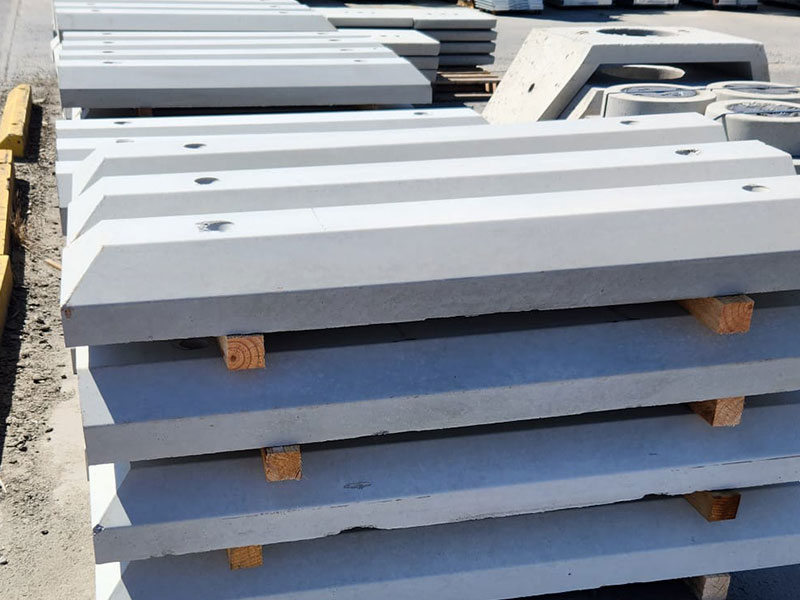
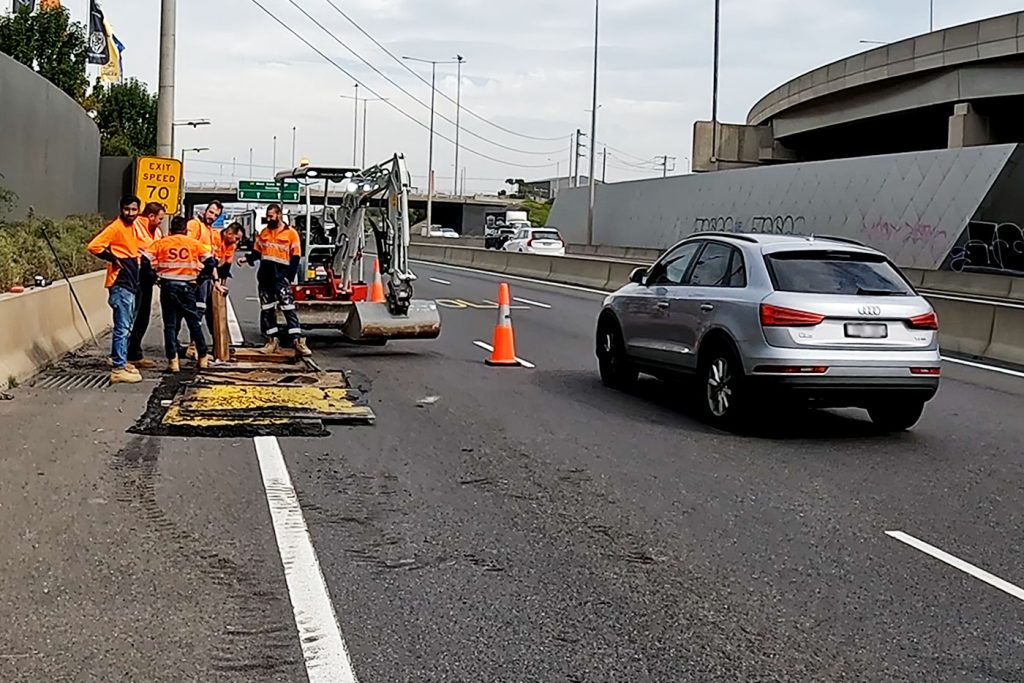
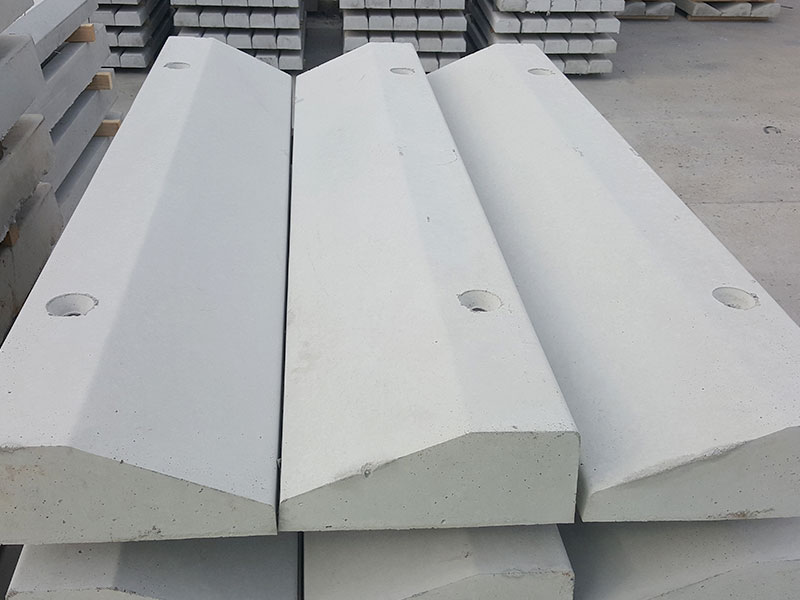
Spiked Kerbs by SVC Civil offer an easy-install solution for traffic separation and control, preventing vehicles from crossing a designated line. Once installed, spiked kerbs effectively block vehicles from accidentally mounting a pedestrian walkway, overshooting a parking bay, bumping into walls or entering restricted areas.

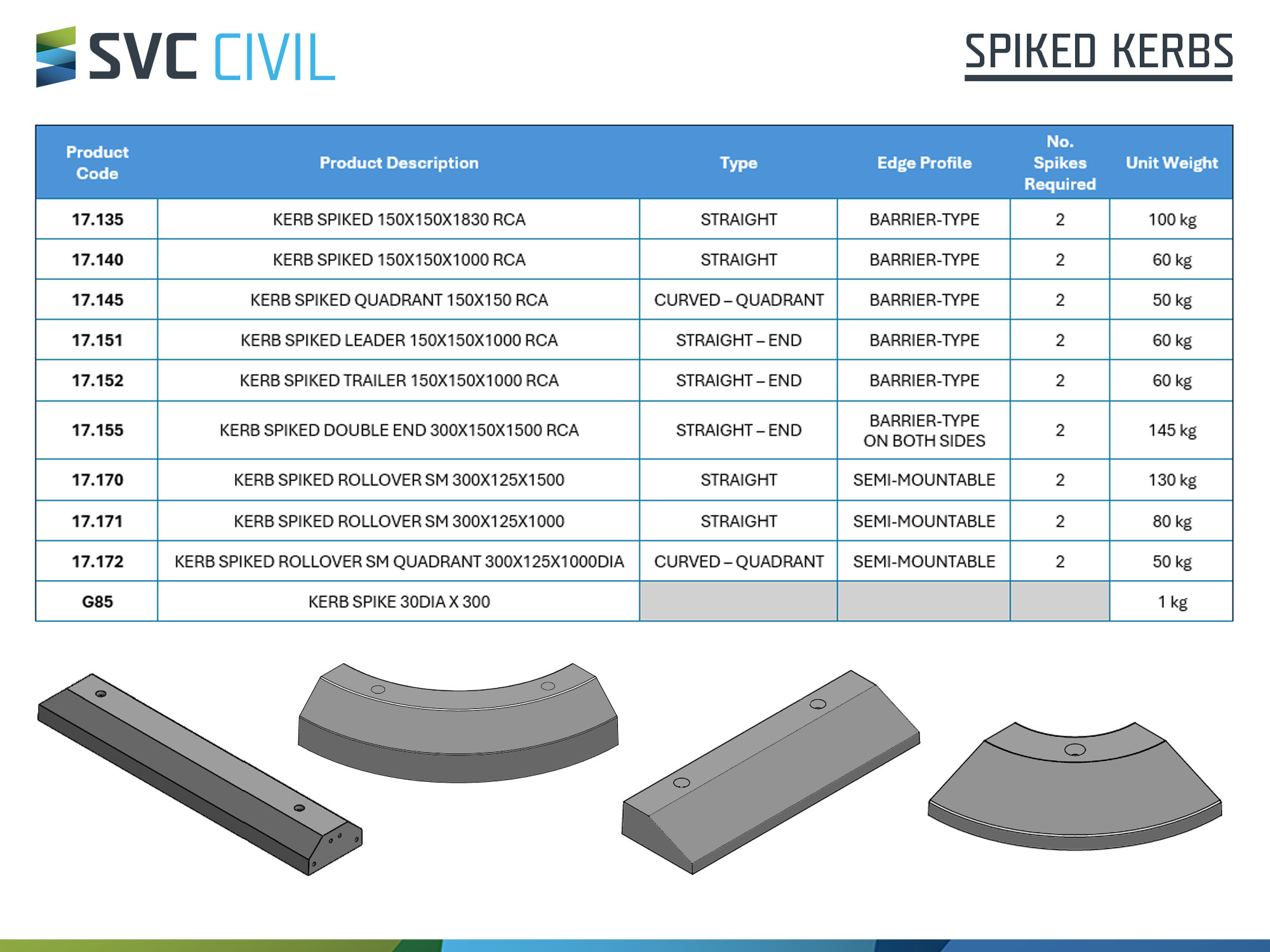
Manufactured from high-strength, reinforced concrete and available in two kerbing profiles, SVC’s precast concrete spiked kerbs offer a durable, vandal-proof alternative to rubber or plastic kerbing products. They are a valuable component for any car park construction, traffic management or refurbishment project.
Features & Benefits

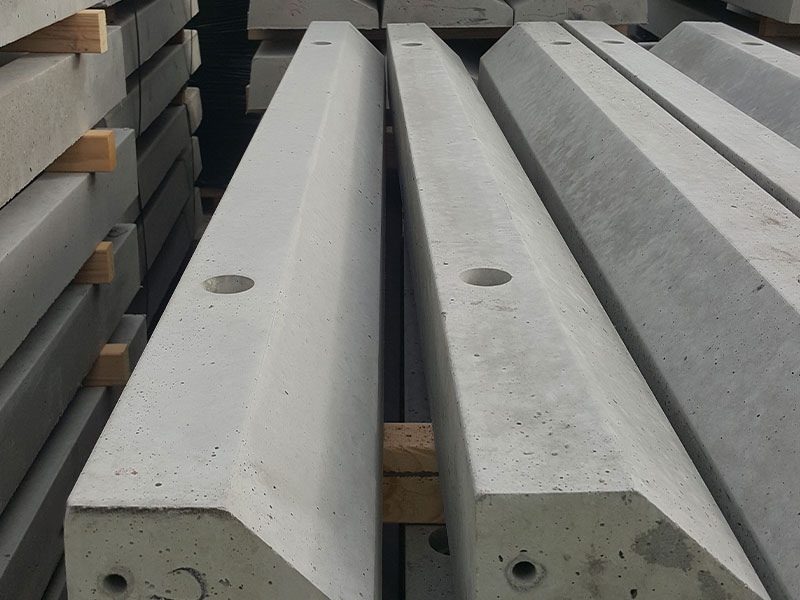
  • Fitted with 20mm diameter holes, allowing bolt-down installation using complementary steel kerb spikes
  • Smooth off-mould finish
  • Available in barrier-type or semi-mountable kerb profile

Material Specifications

  • Made from high-strength 32MPa steel-reinforced concrete
  • Design life: 50 years

Image Gallery

See Applications

Road Infrastructure

Contact Us Today

Operating since 1948, SVC Products is a well-respected local manufacturer and supplier of high quality products to the civil construction industry. Contact our friendly team to discuss your next project.

Frequently Asked Questions

Can you incorporate colour or reflective markings into precast kerbs?

SVC's precast kerbing range - including traffic median kerbs, spiked kerbs, wheel stops, bike separator kerbs and speed humps - is produced in our standard high-strength concrete mix, supplied in an industrial grey concrete colour. This provides a clean blank canvas that allows the client to paint, stencil or add reflective markings to the kerbing products for applications where high-visibility is required.

Why use concrete kerbs instead of plastic or rubber alternatives?

Opting for high-strength precast concrete kerbs creates a solid barrier that offers genuine physical protection, thanks to the material's excellent performance in the outdoor environment and its resistance to degradation, wear and tear. They are a resilient, long-lasting asset in comparison with other materials such as plastic or rubber kerbing options, which are easily damaged upon vehicular impact and require frequent replacement.

What is the advantage of precast kerbing over pouring on-site?

Compared to forming up concrete kerb on-site, installing precast kerbs offers superior quality control and reduced installation time. In-situ kerb installation requires time and labour to prepare formwork, pour and shape concrete on-site, plus a minimum of 24-48 hours for the kerbing to set and dry after installation. In comparison, precast kerbs are delivered to site ready for immediate installation and do not require any further curing time after installation.

Thanks to the controls of a factory manufacturing environment, precast kerbs are often stronger in compressive strength than in-situ concrete. They also exhibit a visually appealing exposed aggregate finish made possible by the shot-blasting of the kerb units during manufacture. All work is completed at the factory prior to installation, meaning the kerbing units arrive on site ready to install as finished products.

How are spiked wheel stops installed?

The wheel stop is placed in the correct position, and holes are drilled through pre-formed voids into the pavement below. Galvanized steel spikes are then driven through the unit into the ground.

How many wheel stops do I need for a single car space?

Typically, standard practice requires one wheel stop centred in each individual parking bay.

Why choose concrete wheel stops over rubber ones?

Concrete wheel stops are significantly more durable, vandal-resistant, and do not degrade or become brittle from UV exposure. They provide a more robust, long-term solution for any high-traffic car park.

GET A QUOTE

Request information